Best Garmin Smart Scale for Muscle Mass Tracking
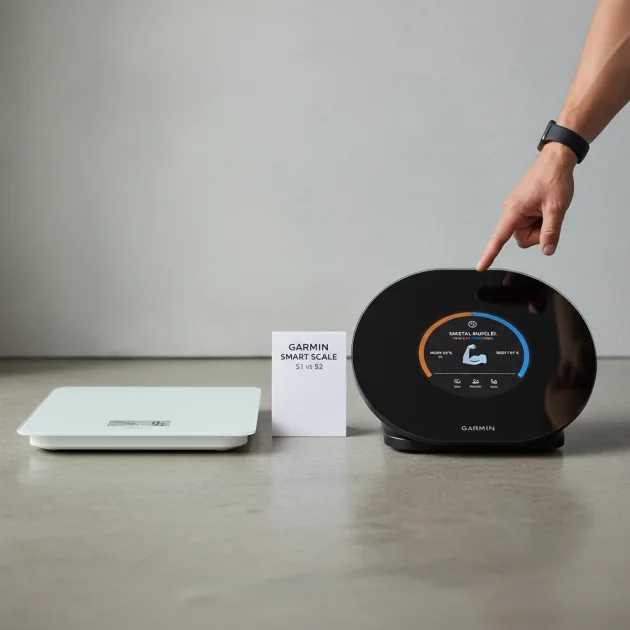
The Garmin Index S2 Smart Scale is the best Garmin smart scale for muscle mass tracking due to its advanced Bioelectrical Impedance Analysis (BIA) technology and seamless integration with the Garmin Connect ecosystem, providing detailed and consistent body composition data including skeletal muscle mass and muscle mass trend graphs.
Quick comparison
| Model | Key Muscle Mass Feature | Connectivity | Price Range |
|---|---|---|---|
| Garmin Index S2 | Skeletal muscle mass, muscle mass trend graphs | Wi-Fi, Bluetooth | $$$ |
| Garmin Index S1 | Muscle mass percentage | Wi-Fi | $$ |
| Garmin Index BPM | N/A (Blood Pressure Monitor) | Bluetooth | $$ |
What muscle mass tracking needs from a smart scale
Accurate muscle mass tracking from a smart scale requires specific features to provide meaningful data. Bioelectrical Impedance Analysis (BIA) is the core technology, sending a small electrical current through the body to estimate body composition. Scales with multi-frequency BIA can offer more precise readings by penetrating different tissue types. Consistency is also crucial; the scale should provide repeatable measurements under similar conditions. Look for scales that track skeletal muscle mass specifically, as this is the most relevant metric for fitness and strength. Data visualization is another key aspect. A good smart scale will integrate with an app that displays muscle mass trends over time, allowing users to monitor progress and identify patterns. The ability to differentiate between total body weight and lean muscle mass helps users understand their body composition changes more clearly. Finally, seamless data synchronization with other fitness devices, like Garmin watches, enhances the overall tracking by consolidating all health metrics in one platform.
Detailed reviews
Garmin Index S2 Smart Scale
The Garmin Index S2 Smart Scale stands out for its comprehensive muscle mass tracking capabilities. It utilizes advanced Bioelectrical Impedance Analysis (BIA) to provide accurate measurements of skeletal muscle mass, not just total muscle percentage. The scale features a high-resolution color display, making it easy to view your metrics directly on the device. Users can track trends for muscle mass over weeks, months, and even years through the Garmin Connect app. This integration is a major advantage, as all body composition data syncs automatically with your other Garmin fitness activities. The Index S2 supports up to 16 user profiles, each with independent muscle mass tracking. Its sleek design and robust build quality ensure durability. The scale connects via Wi-Fi and Bluetooth, offering reliable data transfer. Battery life is excellent, lasting up to nine months on four AAA batteries. For serious athletes and fitness enthusiasts focused on muscle development, the Index S2 provides the detailed insights needed.
Garmin Index S1 Smart Scale
The Garmin Index S1 Smart Scale offers a solid foundation for muscle mass tracking within the Garmin ecosystem. While it’s an older model compared to the S2, it still provides reliable body composition metrics, including muscle mass percentage. The S1 uses standard BIA technology to estimate body fat, body water, bone mass, and muscle mass. Its display is monochrome, showing essential data clearly. Data synchronization occurs via Wi-Fi to the Garmin Connect app, allowing users to view their muscle mass trends alongside other health and fitness data. The S1 supports up to 16 individual users, automatically recognizing each person. It’s a more budget-friendly option for those who want to integrate basic muscle mass tracking with their Garmin devices without needing the advanced features of the S2. The build quality is sturdy, and it operates on four AA batteries, offering a long battery life. For general fitness tracking and monitoring overall body composition, the Index S1 remains a viable choice.
Garmin Index BPM
The Garmin Index BPM is a blood pressure monitor and does not track muscle mass. It is designed specifically for measuring systolic and diastolic blood pressure, along with pulse rate. While it integrates with the Garmin Connect app, it does not offer any body composition analysis features, including muscle mass tracking. Its primary function is to provide accurate blood pressure readings for health monitoring. Users seeking muscle mass data should consider the Garmin Index S1 or Index S2 smart scales, which are specifically engineered for body composition analysis. The Index BPM is a valuable tool for cardiovascular health monitoring but is not relevant for fitness goals related to muscle development or body composition changes. It connects via Bluetooth to the Garmin Connect app, allowing users to track their blood pressure trends over time. This device serves a distinct purpose within the Garmin health ecosystem.
Routine fit
Integrating a Garmin smart scale into your daily routine for muscle mass tracking is straightforward and beneficial. For optimal consistency, weigh yourself at the same time each day, preferably in the morning before eating or drinking, and after using the restroom. This minimizes fluctuations from food, hydration, and activity. Place the scale on a hard, flat surface to ensure accurate readings. The Garmin Connect app becomes your central hub, automatically syncing muscle mass data from the scale. This allows you to visualize trends, compare current readings with past data, and see how your training and nutrition impact your muscle development. For athletes, tracking muscle mass alongside performance metrics from a Garmin watch provides a holistic view of progress. The seamless integration means less manual data entry and more time focusing on your fitness goals. Regular monitoring helps identify plateaus or areas needing adjustment in your workout or diet plan.
FAQs
How does a Garmin smart scale measure muscle mass?
Garmin smart scales, like the Index S2, use Bioelectrical Impedance Analysis (BIA) to measure muscle mass. When you step on the scale, a small, safe electrical current is sent through your body. Muscle tissue, being largely water, conducts electricity better than fat tissue. The scale measures the resistance to this current. Based on this resistance, along with your height, age, and gender entered in your profile, the scale’s algorithms estimate your body composition, including skeletal muscle mass. This method provides a non-invasive way to track changes in your muscle mass over time, offering valuable insights into your fitness progress.
Is Garmin muscle mass tracking accurate?
Garmin smart scales provide a good estimate of muscle mass for tracking trends over time. While no home scale can match the precision of clinical methods like DEXA scans, Garmin’s BIA technology offers consistent and reliable data for personal use. Accuracy can be influenced by factors such as hydration levels, recent exercise, and food intake. To maximize accuracy, weigh yourself consistently under similar conditions, such as first thing in the morning. The value lies in observing the trends and changes in your muscle mass readings over weeks and months, rather than focusing on a single absolute number.
Can I track different types of muscle mass with Garmin scales?
Garmin smart scales primarily track skeletal muscle mass, which is the muscle attached to your bones and responsible for movement. This is the most relevant type of muscle mass for fitness and strength training goals. The scales do not differentiate between specific muscle groups (e.g., biceps vs. quadriceps) or track smooth muscle or cardiac muscle. The data provided focuses on your overall skeletal muscle mass percentage and its absolute weight. This metric is crucial for understanding your body composition and monitoring the effectiveness of your resistance training programs and nutritional strategies.
How does Garmin Connect integrate muscle mass data?
The Garmin Connect app serves as the central platform for all your health and fitness data, including muscle mass. When you weigh yourself on a Garmin smart scale, the data automatically syncs to your Garmin Connect account via Wi-Fi or Bluetooth. Within the app, you can view detailed graphs and trends of your muscle mass over various periods (daily, weekly, monthly, yearly). This allows you to see how your muscle mass changes in relation to your workouts, nutrition, and other activities tracked by your Garmin devices. It provides a comprehensive overview of your body composition progress.
What other body composition metrics do Garmin scales track?
In addition to muscle mass, Garmin smart scales track several other key body composition metrics. These typically include body weight, body fat percentage, body water percentage, bone mass, and Body Mass Index (BMI). The Garmin Index S2, for example, provides all these measurements. Tracking these metrics together offers a more complete picture of your overall health and fitness. Monitoring changes in body fat and muscle mass simultaneously can be particularly useful for those on weight management or body recomposition journeys, helping them understand the impact of their lifestyle choices.
Verdict
For individuals prioritizing muscle mass tracking, the Garmin Index S2 Smart Scale is the superior choice. Its advanced BIA technology provides detailed skeletal muscle mass data, seamlessly integrating with the Garmin Connect ecosystem. This allows for comprehensive trend analysis alongside other fitness metrics from your Garmin devices. While the Index S1 offers a more basic and budget-friendly option for general muscle mass percentage tracking, the S2’s enhanced accuracy, color display, and robust data visualization make it ideal for serious athletes and those deeply invested in monitoring their body composition changes. The Index S2 provides the most actionable insights for optimizing training and nutrition.
Frequently Asked Questions
How does a Garmin smart scale measure muscle mass?
Garmin smart scales, such as the Index S2, use Bioelectrical Impedance Analysis (BIA) to estimate muscle mass. A small electrical current passes through the body, and the scale measures resistance, which is lower in muscle tissue due to its high water content. This data, combined with user profile information, allows the scale's algorithms to calculate skeletal muscle mass.
Is Garmin muscle mass tracking accurate for fitness goals?
Garmin smart scales provide a reliable estimate of muscle mass for tracking trends over time, which is valuable for fitness goals. While not as precise as clinical DEXA scans, their BIA technology offers consistent data for personal use. For best accuracy, weigh yourself consistently under similar conditions, such as first thing in the morning.
Can I track different types of muscle mass with Garmin scales?
Garmin smart scales primarily track skeletal muscle mass, which is the muscle attached to bones and crucial for movement and strength training. They do not differentiate between specific muscle groups (e.g., biceps vs. quadriceps) or track smooth or cardiac muscle. The focus is on overall skeletal muscle mass percentage and its absolute weight.
How does Garmin Connect integrate muscle mass data from the scale?
The Garmin Connect app serves as the central platform for all health and fitness data, including muscle mass. When you use a Garmin smart scale, the data automatically syncs to your Garmin Connect account via Wi-Fi or Bluetooth. Within the app, you can view detailed graphs and trends of your muscle mass over daily, weekly, monthly, and yearly periods.
What other body composition metrics do Garmin scales track besides muscle mass?
In addition to muscle mass, Garmin smart scales track several other key body composition metrics. These typically include body weight, body fat percentage, body water percentage, bone mass, and Body Mass Index (BMI). The Garmin Index S2, for example, provides all these measurements, offering a comprehensive picture of overall health and fitness.
Integrate a Garmin Smart Scale for Muscle Mass Tracking
To effectively track muscle mass using a Garmin smart scale, follow these steps for consistent and accurate data collection and analysis within the Garmin Connect ecosystem.
For optimal consistency, weigh yourself at the same time each day, preferably in the morning before eating or drinking, and after using the restroom. This minimizes fluctuations from food, hydration, and activity levels. Ensure the scale is placed on a hard, flat surface for accurate readings.
The Garmin Connect app automatically syncs muscle mass data from your smart scale via Wi-Fi or Bluetooth. This integration means less manual data entry and ensures all your health metrics are consolidated in one platform. Confirm that your scale is connected to your Garmin Connect account.
Use the Garmin Connect app to visualize trends in your muscle mass over time. You can view graphs comparing current readings with past data, allowing you to see how your training and nutrition impact your muscle development. Regular monitoring helps identify plateaus or areas needing adjustment in your workout or diet plan.
Smart home that does not lock you in
Free PDF — protocol compatibility matrix for 30 hubs and devices.
I finally upgraded to the Garmin Index S2 after using an older scale for years, and the difference is night and day. The muscle mass trend graphs are incredibly motivating for my fitness journey. It’s so easy to see my progress directly in Garmin Connect, which is a huge plus since all my other devices are Garmin too. Definitely worth the investment if you’re serious about tracking more than just weight.
I’ve been using the Garmin Index S1 for about six months now, and it’s been pretty solid for tracking my muscle mass percentage. It connects to Wi-Fi without any issues and syncs my data reliably. My only minor complaint is that I wish it had the more detailed skeletal muscle mass tracking like the S2, but for the price I paid, it’s a great entry-level smart scale.
This scale has been a game-changer for understanding my body composition beyond just the number on the scale. The seamless integration with Garmin Connect is fantastic; all my data is in one place. I love being able to see how my muscle mass changes with my training. It’s definitely helped me stay on track with my strength goals.
I got the S2 because I really wanted to track my muscle mass more accurately, especially with the BIA technology mentioned. While it does connect to my Garmin app fine, sometimes the readings seem a little inconsistent if I weigh myself at different times of day, even with the same hydration levels. It’s good, but not always perfectly precise as I hoped for the $$$ price range.